Rosy Love: A Handwritten Font with a Playful Heart
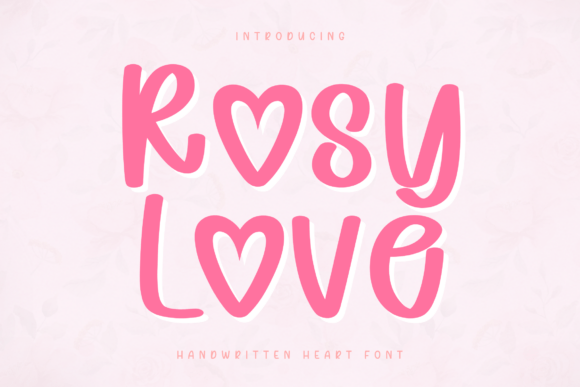
Finding a typeface that balances personality with professionalism can be a challenge. You want something that feels personal and engaging, yet remains clear and effective across various applications. Rosy Love is a creative font that steps into this space with confidence. It’s a bold, playful handwritten font characterized by its charming heart-shaped details woven into the letterforms. This isn't just another script font; it’s a design asset with a distinct sweet and romantic feel, built with smooth curves and a clean structure that ensures it’s more than just decorative. For designers and creators, it offers a unique voice that’s both expressive and surprisingly versatile.
Visual Character and Design Personality
At its core, Rosy Love is a display font with a strong visual presence. Its rounded letterforms give it a soft, approachable quality, while the integrated heart accents add a layer of whimsy and affection. The design avoids overly complex swashes or illegible loops, prioritizing a friendly and fun handwritten style. This makes it a standout choice where a project needs to convey warmth, joy, or a touch of romance without sacrificing clarity. Think of it as a modern typography choice that bridges the gap between a casual script font and a more structured sans serif font in terms of immediate emotional impact.
The font’s personality is undeniably playful and sweet, but its construction is thoughtful. The weight and spacing are calibrated to maintain excellent readability, even at smaller sizes or from a distance. This is a crucial consideration for any commercial font intended for real-world products. It feels personal, like a note from a friend, yet its consistency across a full character set ensures it functions reliably as a cornerstone of a brand identity or a key element in a marketing campaign.
Practical Applications Across Creative Projects
Where does Rosy Love truly shine? Its charm is particularly effective in projects that aim to connect on an emotional level. For small business owners and entrepreneurs, it’s an excellent choice for logo design in industries like boutique bakeries, floral shops, wedding planning services, or children’s clothing brands. The font immediately sets a tone of care, sweetness, and approachability, which can be a powerful component of a cohesive brand identity.
Beyond logos, consider its use in packaging design. Imagine this typeface on labels for artisanal chocolates, scented candles, or handmade soaps. It communicates a handcrafted, premium feel that can elevate a product on the shelf. In the realm of digital design, Rosy Love is perfect for social media graphics, especially for Valentine’s Day promotions, anniversary sales, or content centered on themes of love and friendship. Its eye-catching nature helps posts stand out in a crowded feed, driving better audience engagement.
For crafters and hobbyists, particularly those using tools like Cricut, this font is a practical design asset. Its clean lines and defined shapes translate well to vinyl cuts for stickers, decals, and custom merchandise like tote bags or mugs. The heart details add a unique touch that generic handwritten fonts lack, making finished products feel more special and intentional. It’s also a strong candidate for editorial design in greeting cards, invitation suites, and children’s book titles where a playful tone is desired.
Integrating Rosy Love into Your Design Workflow
Choosing the right font is only half the battle; integrating it effectively is key. When evaluating Rosy Love for a project, first consider your audience and message. Is the goal to be fun, romantic, and friendly? If yes, it’s likely a good fit. However, for projects requiring a serious, corporate, or minimalist tone, a different typeface—perhaps a clean sans serif font or a classic serif font—would be more appropriate.
A critical step is testing font pairings. Rosy Love works beautifully as a headline or accent font but can be overwhelming in long body text. Pair it with a simple, highly legible sans serif font for paragraphs or supporting information. This creates a clear visual hierarchy, allowing the playful handwritten font to capture attention while the paired font ensures readability for detailed content. For example, use Rosy Love for a product name on packaging and a font like Open Sans or Lato for the ingredient list.
Before finalizing, always review the font’s full character set and any included styles. Check for essential punctuation, numerals, and any alternate characters that might enhance your design. Crucially, understand the licensing. As a premium font, ensure its license covers your intended use, whether for personal projects, client work, or commercial merchandise. Proper licensing protects you and supports the type designers who create these valuable tools.
Finally, test it in context. Mock up your design on the actual medium—be it a website header, a printed sticker, or a social media post. Observe how the heart details render at different sizes and on various backgrounds. This practical review confirms that Rosy Love not only looks charming in a font preview but also performs effectively in its real-world application, helping you create designs that are both beautiful and functional. It’s a creative font that, when used thoughtfully, can significantly enhance the emotional resonance and visual appeal of your work.